
Botox vs Dysport Allentown PA: Differences & Results

Botox and Dysport are often compared as if one must be the better injectable. In practice, the choice is more personal.
Both treatments can soften expression-related wrinkles by temporarily relaxing targeted facial muscles, but they are not identical products. Their formulations, dosing systems, onset, and treatment characteristics differ. If you are comparing Botox vs Dysport in Allentown, PA, the most useful question is not which one wins. It is which one fits your facial anatomy, goals, comfort level, and treatment plan.
At Anllo Center for Aesthetics, the focus is on natural-looking care, thoughtful recommendations, and treatment plans that feel appropriate for you rather than excessive.
What You’ll Learn From This Article
- How Botox and Dysport work on facial muscles
- Why Botox units and Dysport units cannot be compared one for one
- Where each injectable may be used
- What to expect from onset and duration
- How to compare Botox vs Dysport cost more accurately
- Why injector skill and facial assessment matter as much as product choice
Botox and Dysport Work in a Similar Way, but They Are Different Products
Botox and Dysport are both botulinum toxin type A injectables. They work through a similar mechanism, but their formulations are different.
Botox Cosmetic contains onabotulinumtoxinA. Dysport contains abobotulinumtoxinA.
How Botulinum Toxin Affects Facial Muscles
Every time you frown, squint, smile, or raise your eyebrows, nerve signals tell specific facial muscles to contract.
Over time, repeated muscle movement can contribute to expression-related wrinkles such as forehead lines and frown lines between the eyebrows.
Botulinum toxin treatments temporarily reduce the nerve signals that trigger targeted muscle contractions. As those muscles relax, the skin above them may look smoother.
This is why Botox and Dysport are commonly used for dynamic wrinkles, meaning lines that are influenced by facial expressions.
They do not address every sign of aging. Volume loss, skin laxity, acne scars, uneven texture, and sun damage may need a different treatment approach.
A published review of botulinum toxin type A products explains that the available formulations have different manufacturing processes, compositions, and potency measurements. Those differences matter when comparing products clinically.
That distinction becomes especially important once units enter the conversation.
Botox vs Dysport Units: Why the Numbers Are Different
One of the most confusing parts of a Botox and Dysport comparison is dosing.
A Dysport treatment may involve a larger number of units than a Botox treatment. That does not mean the treatment is stronger or that you are receiving more medication in a simple one-to-one sense.
Botox Units and Dysport Units Are Product Specific
Each product uses its own potency measurement. Botox units and Dysport units are not interchangeable.
This means you should not compare 20 units of Botox directly with 20 Dysport units.
Clinical research sometimes uses specific dose ratios when studying the two products, but those ratios belong to the study design. They are not universal conversion formulas for every treatment area or patient.
For example, one randomized forehead study compared 25 units of Dysport with 10 units of Botox on opposite sides of the forehead. The researchers were testing a defined ratio under controlled conditions, not establishing a dosing rule for every patient.
The Right Dose Depends on Your Face
Your injector may consider:
- Facial muscle strength
- The treatment area
- Your facial anatomy
- How much movement you want to keep
- Previous Botox or Dysport treatments
- Your cosmetic goals
- The product being used
Someone with strong frown muscles may need a different treatment plan than someone who wants light softening of early forehead lines.
That is why a consultation is more useful than choosing a treatment based on a unit number alone.
Once you understand dosing, the next question is usually where each injectable can be used.
Where Botox and Dysport Can Be Used
Both injectables can reduce certain expression-related wrinkles, although their FDA-approved cosmetic indications differ.
Your provider should assess the specific treatment area and choose the product and injection pattern that fit your anatomy.
Frown Lines Between the Eyebrows
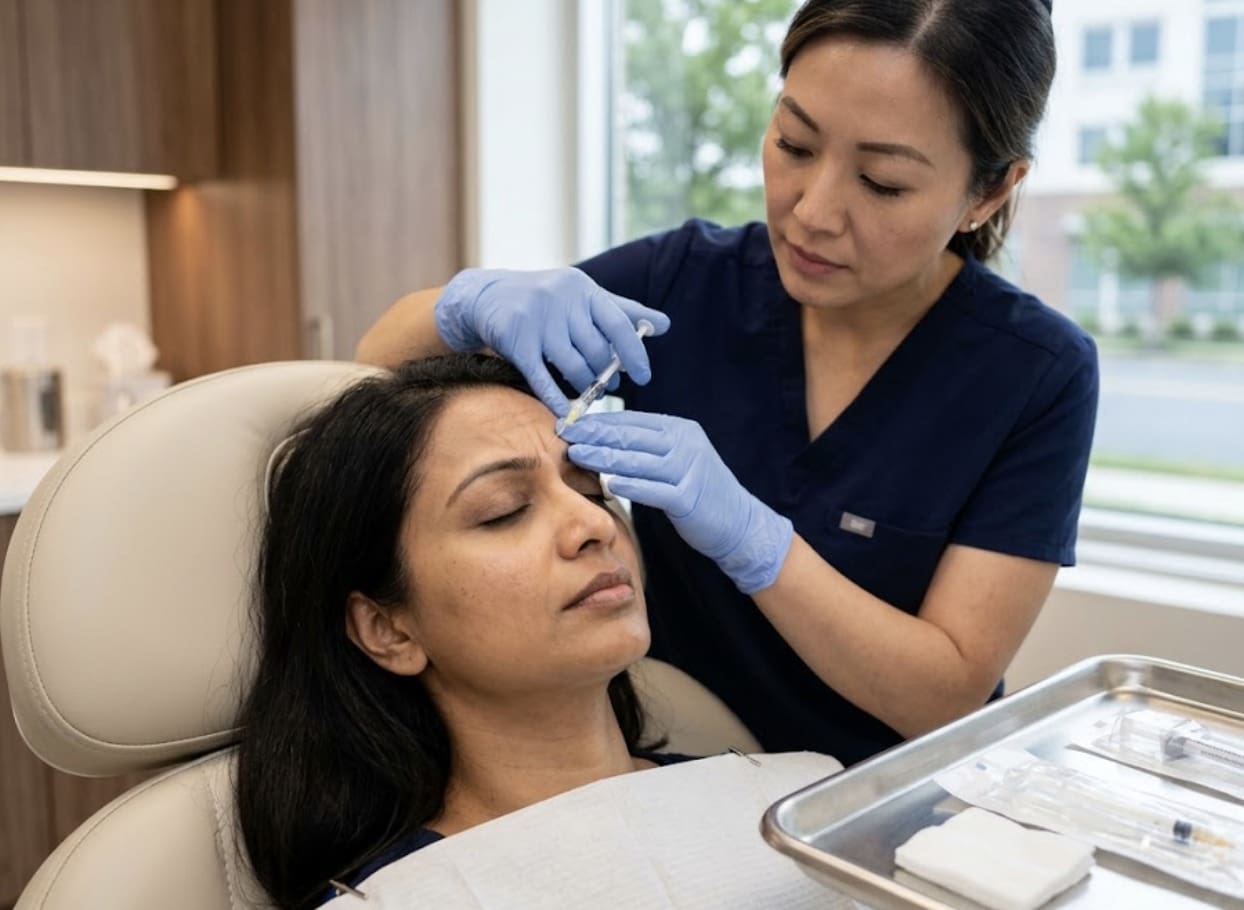
Frown lines, sometimes called “11 lines,” appear between the brows. They develop partly because the muscles that pull the eyebrows inward contract repeatedly.
Both Botox and Dysport are commonly discussed for this area.
The goal is not always to eliminate every bit of movement. Many patients prefer smoother frown lines while still looking expressive.
Forehead Lines
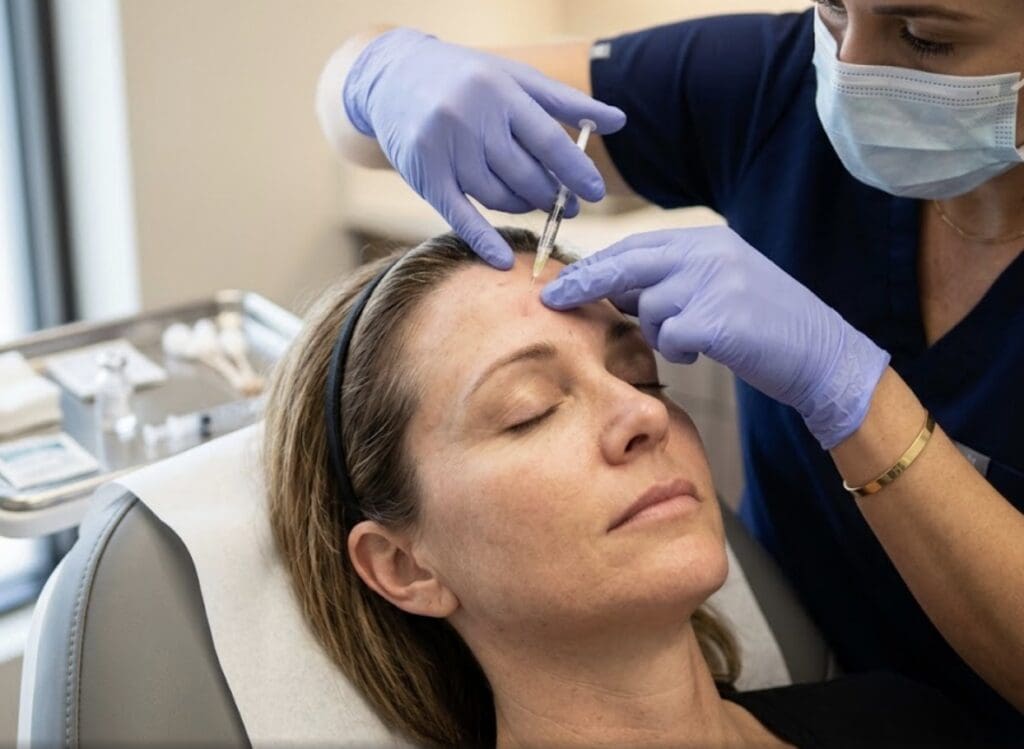
Forehead lines develop as the frontalis muscle repeatedly lifts the eyebrows.
Treatment requires careful planning because this muscle also helps position the brows. Too much relaxation in the wrong place can affect brow position or make the forehead feel heavier.
A thoughtful treatment plan considers forehead height, brow shape, muscle strength, and how much facial expression you want to preserve.
Other Expression-Related Areas
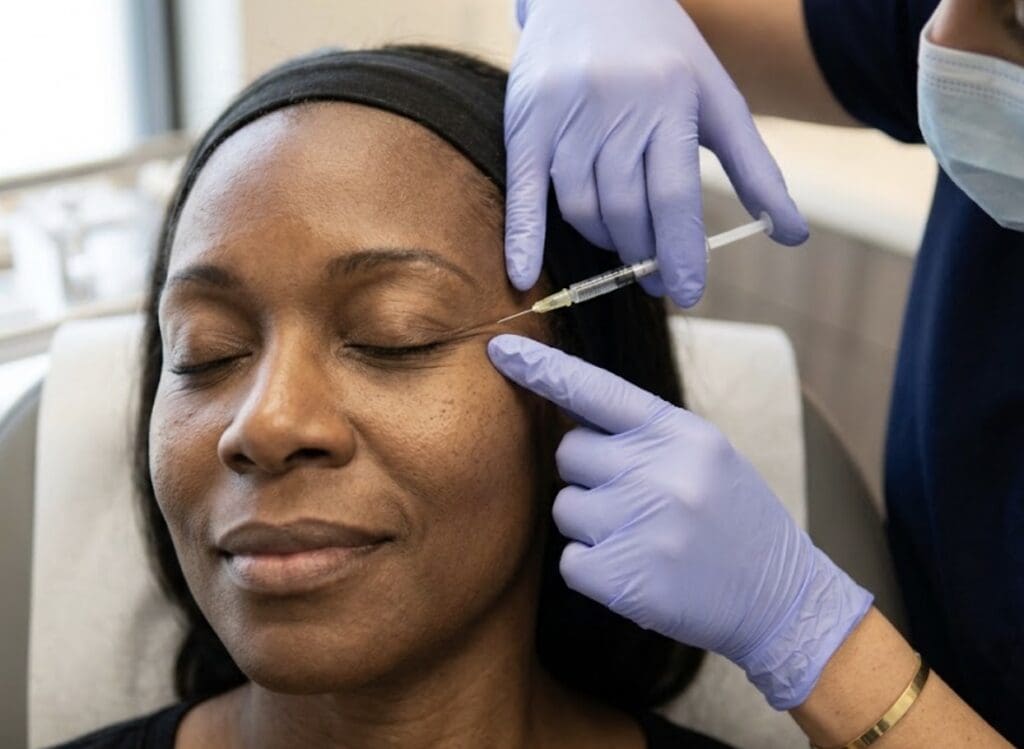
Botox is also commonly used for areas such as crow’s feet around the eyes when clinically appropriate.
Other treatment areas may be discussed during a consultation depending on your concerns, anatomy, product labeling, and provider judgment.
Does Dysport Spread More Than Botox?
This is one of the most repeated claims online.
Dysport is sometimes described as spreading more widely, especially in larger treatment areas like the forehead. That explanation leaves out important details.
Dose, dilution, injection volume, placement, anatomy, and injector technique can all influence how a botulinum toxin treatment behaves.
More spread is not automatically better. Precision matters because the goal is to relax the intended muscle without unnecessarily affecting nearby muscles.
Product choice matters, but placement and treatment technique often matter just as much.
Botox vs Dysport Results: Onset and Duration
Most patients want to know when they will see a change and how long the result may last.
Both answers vary by person.
How Quickly Does Botox Work?
Botox works gradually.
Some people begin noticing changes within several days, while the full cosmetic effect often takes about 10 to 14 days to settle.
If you are preparing for a wedding, vacation, reunion, or professional photos, it is usually better to allow enough time for the treatment to take effect before the event.
How Quickly Does Dysport Work?
Dysport may also begin producing visible changes within several days.
Some patients notice early smoothing sooner, but timing varies by treatment area, dose, muscle strength, and personal response.
It is better to judge the final result after the treatment has had enough time to settle rather than after the first few days.
Does Botox or Dysport Last Longer?
There is no reliable rule that one always lasts longer.
Many cosmetic patients notice results for several months, often around three to four months. Duration can vary based on your metabolism, facial muscle activity, treatment area, dose, and previous treatment history.
Comparative studies have also produced different findings. One earlier randomized pilot study evaluating glabellar lines found more prolonged efficacy with Botox at the specific doses used in that study.
That does not prove Botox universally lasts longer. Other studies have reported different findings.
The more useful takeaway is that your own response over time can help guide future treatment choices.
Results are only part of the decision. Cost is another common reason patients compare Botox or Dysport.
Which Is Better, Botox or Dysport?
No single answer works for everyone.
Both treatments can produce natural-looking results when the dose, product, and injection pattern fit the person receiving treatment.
| Factor | Botox | Dysport |
| Active ingredient | OnabotulinumtoxinA | AbobotulinumtoxinA |
| Treatment type | Botulinum toxin type A | Botulinum toxin type A |
| Units | Product specific | Product specific |
| Main goal | Temporarily relax targeted facial muscles | Temporarily relax targeted facial muscles |
| Onset | Often begins within several days | Often begins within several days |
| Duration | Commonly several months | Commonly several months |
| Best fit | Depends on anatomy, goals, and past response | Depends on anatomy, goals, and past response |
Botox May Be a Good Option to Discuss If…
Botox may make sense if you have used it before and liked your results, if your injector feels it fits the treatment area, or if its dosing characteristics align well with your goals.
Previous experience can be helpful because your provider can see how your muscles responded and adjust future treatment accordingly.
Dysport May Be a Good Option to Discuss If…
Dysport may be worth considering if you have responded well to it in the past or if your injector feels it fits your facial anatomy and treatment goals.
Some patients also choose to discuss Dysport after trying another neuromodulator and wanting to compare their experience.
Your Own Response Matters
Two patients with similar forehead lines may need different doses and injection patterns.
One may want very soft movement. Another may prefer more visible smoothing.
The best treatment plan should account for those differences rather than follow a standard formula.
That is also why safety and injector experience deserve just as much attention as the brand name on the vial.
Safety, Side Effects, and Treatment Limitations
Botox and Dysport are medical treatments, even when they are performed in a calm boutique setting.
Proper patient screening, facial assessment, product selection, and injection technique matter.
Common Temporary Side Effects
Some people experience short-term effects such as:
- Redness
- Tenderness
- Mild swelling
- Bruising
- Headache
Other side effects can occur, and risks vary by treatment area, dose, and individual patient factors.
Your provider should explain what to expect before treatment and give you appropriate aftercare instructions.
Injector Skill Matters
A natural-looking result depends on more than the injectable itself.
Your injector needs to understand how the muscles of your forehead, brow, and upper face work together.
Treating one muscle can affect nearby movement, so placement and dose must be carefully chosen.
This is especially important if your goal is to smooth lines while keeping facial expressions that still feel like you.
Share Your Medical History
Tell your provider about medications, supplements, previous injectable treatments, prior reactions, and relevant medical conditions.
You should also discuss pregnancy or breastfeeding, neuromuscular conditions, active infection near the treatment area, or any previous reaction to botulinum toxin products.
This is not a complete list of precautions or contraindications. Your medical provider should determine whether treatment is appropriate for you.
A thorough consultation gives the injector the information needed to make that decision safely and thoughtfully.
What to Expect During a Botox or Dysport Consultation in Allentown
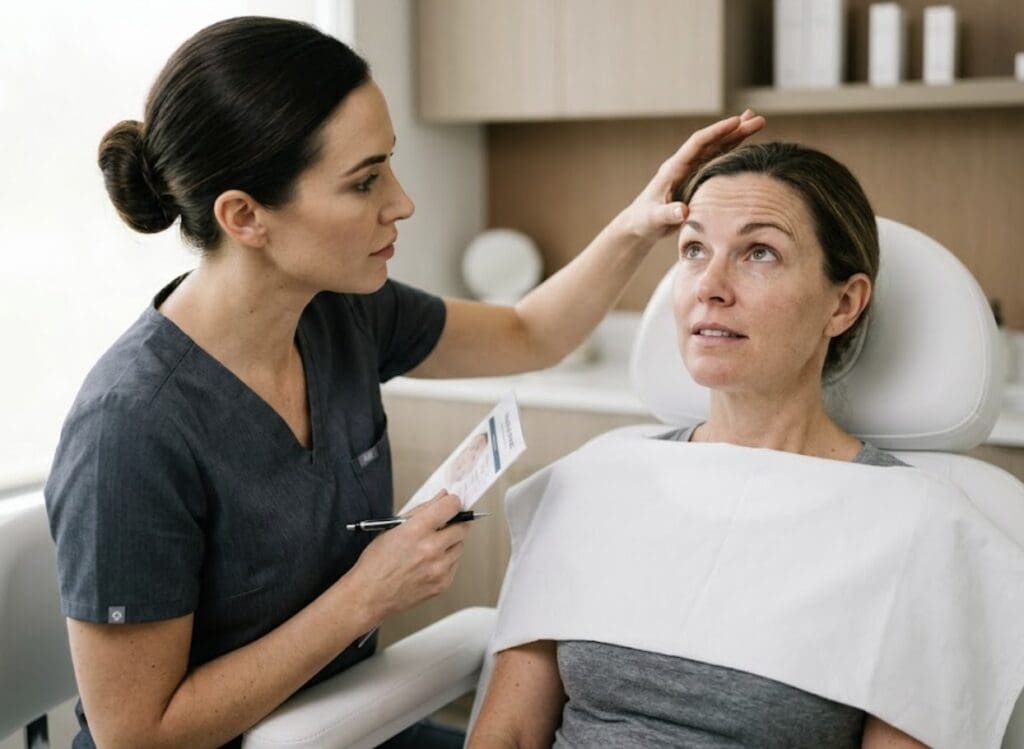
A good injectable consultation should feel like a conversation, not a sales pitch.
At Anllo Center for Aesthetics, we focus on listening to what concerns you and what your goals are. Together, we create a long-term treatment plan so you can maintain your results.
Your Provider Will Watch Your Face Move
Your injector may ask you to:
- Raise your eyebrows
- Frown
- Smile
- Squint
- Relax your face
These movements show how your facial muscles work and which muscles are contributing to the lines you see.
It also helps separate dynamic wrinkles from other concerns such as volume loss or skin texture.
If a concern isn’t primarily caused by muscle movement, more Botox or Dysport units may not be the right solution.
You Can Talk About How Natural You Want the Result to Look
Some patients want stronger smoothing.
Others want softer lines but still want noticeable eyebrow movement and facial expression.
There is no single correct preference.
Tell your injector if you are worried about looking frozen, want a very subtle result, or have had a previous treatment you liked or disliked.
That information helps shape a treatment plan around you.
Other Treatments May Address Different Concerns
If your main concern involves volume loss, skin laxity, acne scars, uneven texture, or dull skin, Botox or Dysport may only address part of the issue.
Depending on your goals, your provider may discuss treatments such as filler, Sculptra, Morpheus8, microneedling, facials, chemical peels, or skincare.
That does not mean you need several treatments.
Anllo Center’s approach is centered on honest guidance and recommending what fits your needs, comfort level, and priorities.
That same approach helps make the Botox versus Dysport decision feel much less complicated.
Botox vs Dysport in Allentown: Choose Based on Your Goals
The most helpful way to compare Botox vs Dysport is to look beyond the brand name.
Both are botulinum toxin type A injectables that temporarily relax targeted facial muscles. They use different formulations and unit systems, so you can’t compare their doses directly.
Onset and duration vary from person to person. Research does not support treating one product as universally better for every patient.
Your facial anatomy, muscle strength, previous treatment history, budget, treatment goals, and desired amount of movement should all influence the choice.
For many patients in Allentown and the Lehigh Valley, the right plan helps them look refreshed while still feeling recognizable and natural.
Frequently Asked Questions
1. Is Botox vs Dysport better for forehead lines?
Neither product is automatically better for every forehead.
Your injector should consider forehead height, brow position, muscle strength, previous treatment history, and how much movement you want to preserve before recommending a product and dose.
2. Does Dysport work faster than Botox?
Dysport may begin showing changes within several days, and Botox can also begin working during that time.
Full results take longer to settle, and timing varies by person.
3. How many Dysport units equal 20 Botox units?
There is no simple one-to-one conversion that patients should use.
Dysport units and Botox units are product-specific and measured differently. Your injector should determine the dose based on the treatment area, anatomy, product, and treatment goals.
4. Does Botox or Dysport last longer?
Both treatments commonly last for several months, often around three to four months, but there is no guarantee that one will last longer for a particular person.
Dose, metabolism, muscle activity, treatment area, and individual response can all affect duration.
5. How much does Botox vs Dysport cost in Allentown, PA?
The total price depends on the product, dose, number of treatment areas, and your personalized plan.
Because Botox and Dysport use different unit systems, comparing unit prices alone can be misleading. Ask for the estimated total treatment cost during your consultation.
Schedule a Personalized Injectable Consultation in Allentown
If you are deciding between Botox and Dysport, a consultation can help you understand the differences based on your face rather than general online comparisons.
At Anllo Center for Aesthetics in Allentown, our team focuses on thoughtful recommendations, natural-looking results, and treatment plans built around your comfort level and goals.
Schedule a complimentary consultation to meet with our aesthetic team and discuss which option may fit you best.
